A robot vacuum succeeds when the home, cleaning expectations and maintenance routine suit its design. Navigation technology is important, but thresholds, loose cables, dark rugs, chair spacing and debris type can matter more than a long feature list. ChoiceVanta uses a decision-first method: define the situation, remove incompatible options, compare the remaining evidence on equal terms and document the trade-offs. This guide contains no paid placement and links only to related ChoiceVanta guidance.
Define the decision before opening a comparison table
Map each floor, measure critical thresholds and low furniture, identify rooms that need exclusion, and decide which manual cleaning tasks will remain. A useful brief is short enough to apply consistently but precise enough to reject an option. Write the non-negotiable conditions first, followed by preferences and a total budget. If several people will use or approve the choice, agree on this brief before a trial or purchase.
The first version should capture:
- floor map
- obstacle profile
- pet and debris pattern
- mopping expectations
- privacy and maintenance limits
Give each requirement an observable test. Words such as “fast”, “simple”, “secure” or “good value” are not criteria until the team states what would count as success. This prevents marketing language from becoming the scoring system.
Compare the criteria that change the outcome
Navigation and coverage
Reliable mapping should produce repeatable coverage, sensible room division and recover gracefully when furniture changes or the robot is moved. Review full cleaning paths and confirm multi-floor, no-go zone and offline behaviours for the exact model. Record the result in the same short decision sheet so that attractive but unsuitable options do not return to the shortlist later.
Floor and obstacle handling
Brush design, wheel clearance, edge behaviour and object detection determine whether the robot copes with rugs, thresholds, cables and chair bases. Measure the home and seek tests that include comparable obstacles rather than an empty demonstration floor. Record the result in the same short decision sheet so that attractive but unsuitable options do not return to the shortlist later.
Cleaning system
Suction, brush agitation, dust-bin design and mopping pressure work as a system. A vibrating or lifting mop still requires suitable pads, water management and realistic stain expectations. Compare pickup by debris and floor type, then inspect how easily hair, pads and filters are removed. Record the result in the same short decision sheet so that attractive but unsuitable options do not return to the shortlist later.
Dock and daily routine
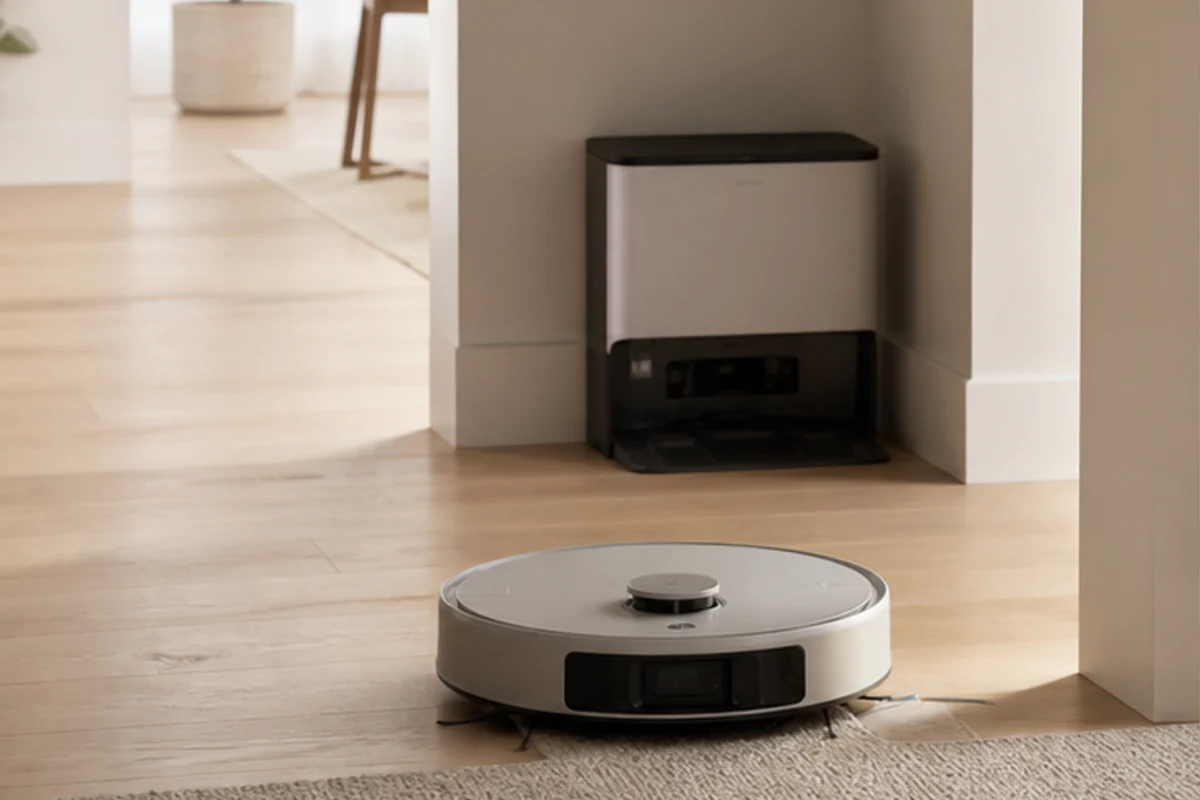
Self-emptying and washing docks reduce some contact with dirt but add size, consumables, water handling, noise and cleaning duties of their own. Measure the dock location, simulate bag or tank changes and confirm the idle power and consumable schedule. Record the result in the same short decision sheet so that attractive but unsuitable options do not return to the shortlist later.
Data and privacy
Cameras, microphones, maps and cloud accounts can reveal information about a home. Local processing and clear deletion controls reduce unnecessary exposure. Read the device permissions, account requirements, retention controls and behaviour when internet access is unavailable. Record the result in the same short decision sheet so that attractive but unsuitable options do not return to the shortlist later.
Test claims against evidence and the normal routine
A short obstacle video is not enough. Strong evidence shows repeated routes, missed areas, recovery after obstruction, debris pickup by floor type and maintenance after several runs. Separate a published specification from an independently observed result and from a personal preference. Each can inform the decision, but they answer different questions. Note the date, model or service tier, test conditions and any important limitation. When evidence conflicts, prefer the source that most closely resembles the intended use and explains its method.
A trial should include a normal task, an awkward case and a recovery step. The awkward case reveals limits; the recovery step shows what happens when a connection, account, component or process fails. Do not place sensitive information into a trial environment unless its controls and retention have already been approved.
Account for regional and market differences
Apartment size, common flooring, electrical plug, spare-part distribution and privacy law differ by region. Imported docks may require more than a passive plug adapter and can lose local service support. Confirm the exact model, plan, seller or provider available in the destination market. Price should be recorded with tax, currency and date. Warranty, consumer remedies, support language, electrical standards and feature availability can change the value of an otherwise identical-looking offer.
Calculate cost over the intended period
Include bags, filters, brushes, mop pads, cleaning solution when required and the time spent cleaning the dock. The most automated model is not automatically the least demanding over two years. Use a realistic period rather than an arbitrary monthly comparison. Record purchase or subscription cost, required accessories, consumables, support, migration, maintenance and a plausible exit cost. Time is also a resource: configuration, training, repeated manual work and difficult support can outweigh a small price difference.
Watch for risk signals
- The dock does not fit a ventilated and accessible location. Pause the decision until the claim, responsibility or fallback is documented.
- Cloud access is mandatory but data controls are unclear. Pause the decision until the claim, responsibility or fallback is documented.
- Consumable pricing is omitted from the comparison. Pause the decision until the claim, responsibility or fallback is documented.
A risk signal does not always disqualify an option. It changes the burden of proof. Ask who owns the risk, how it is detected, what the fallback costs and whether the answer is part of a durable policy or merely a sales conversation.
Use a disciplined shortlist
- Remove any option that fails a non-negotiable requirement.
- Score the remaining criteria with the same scale and written evidence.
- Run the normal, awkward and recovery tests on the strongest candidates.
- Calculate the total cost and regional constraints over the intended period.
- Record the selected trade-off, review date and conditions that would trigger a change.
The final choice should be explainable in a few sentences: what need it serves, what evidence supports it, which limitation was accepted and how the owner will monitor that limitation. This record is more valuable than a generic ranking because it remains useful when products, prices and circumstances change.